- Call/Email Us
- +256763696910
- corazonsafarisafrica@gmail.com

The Great Wildebeest Migration | Tanzania and Kenya’s massive event
Blog post-Corazon safaris Africa
July 28, 2026Best of Big five wildlife experience. The ultimate experience for Africa Safari
August 20, 2026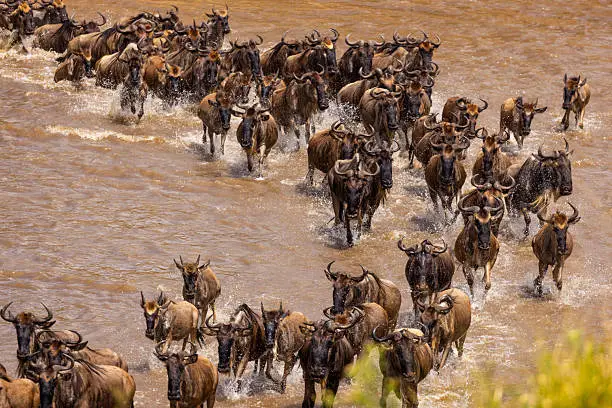
The Great Wildebeest Migration| Tanzania and Kenya’s massive event
The Great Wildebeest Migration. Every year, one of the world’s most extraordinary wildlife events unfolds across the vast plains of East Africa the Great Wildebeest Migration. Often called the “Great Migration,” this incredible journey involves more than 1.5 million wildebeest, accompanied by hundreds of thousands of zebras and gazelles, as they travel between Tanzania’s Serengeti National Park and Kenya’s Maasai Mara National Reserve.
This is an experience you shouldn’t allow to miss for your Tanzania and Kenya Safari in East Africa. Its the unforgettable moment sight seeing the Wildebeests crossing the river from Serengeti to Masai Mara national in order to look for green pasture. In Addition during the crossing of the river, the wildebeest are seen being attacked by the water predators like Crocodiles and also ground predators like Lions hence making the unforgettable highlight
Corazon Safaris Africa the top African Safari and tours, has got various packages for the wildebeest migration. Contact an African safari expert
Why Do the Wildebeest Migrate?
The Great Wildebeest Migration is driven by a simple yet powerful force: survival. The animals follow seasonal rains in search of fresh grass and reliable water sources. As the landscape changes throughout the year, they move in a continuous circular route, covering nearly 1,800 miles (2,900 kilometers) annually.
A Journey Filled with Challenges. The Great Wildebeest Migration
The migration is far from an easy trek. Wildebeest face countless dangers along the way, including predators such as lions, leopards, cheetahs, and hyenas. One of the most dramatic moments occurs during the river crossings, where thousands of animal’s plunges into crocodile-infested waters, risking their lives to reach greener pastures.
Despite these obstacles, the migration continues year after year, showcasing the remarkable instincts and resilience of these animals.
The Circle of Life
The Great Migration is more than just a movement of animals it’s a vital part of the East African ecosystem. Predators depend on the migrating herds for food, while grazing helps maintain healthy grasslands. During the calving season in the southern Serengeti, nearly half a million calves are born within just a few weeks, providing new life and sustaining the natural cycle.
A Wildlife Experience Like No Other. The Great Wildebeest Migration
For travelers and wildlife enthusiasts, witnessing the Great Wildebeest Migration is an unforgettable experience. Whether watching thousands of animals thunder across the plains or seeing a dramatic river crossing, the migration offers breathtaking moments that highlight the beauty and power of nature.
Protecting This Natural Wonder
Conservation efforts are essential to preserving the migration. Protecting wildlife corridors, reducing habitat loss, and promoting responsible tourism help ensure that future generations can continue to witness this extraordinary natural phenomenon.
Final Thoughts
The Great Wildebeest Migration is a powerful reminder of nature’s resilience and balance. It is a story of survival, determination, and the enduring rhythm of life in the African wilderness. For anyone passionate about wildlife, this annual journey remains one of the greatest spectacles on Earth.
FAQs
1 What makes the migration so special?
It is considered one of the world’s greatest wildlife spectacles due to its massive scale, dramatic river crossings, predator-prey interactions, and the continuous cycle of life.
2 Why do wildebeest migrate?
They migrate in response to seasonal rainfall, following fresh grass and reliable water sources essential for their survival.
3 Is there a guaranteed time to see a river crossing?
No. River crossings are unpredictable and depend on weather, river levels, and herd behavior. Visitors may need to wait several hours or even days.
4 When is the best time to visit?
It depends on what you want to see:
Calving season: January–March
River crossings: July–October
General wildlife viewing: June–October
CONTACT YOUR SAFARI EXPERT FOR A MASSIVE AFRICAN SAFARI AND TOUR EXPERIENCE
